

For any accounting practice, handling bookkeeping looks simple, but it’s not exactly a piece of cake. We say this because we have observed an accounting practice in Manchester struggling with bookkeeping. Their bookkeeping team was bogged down under piles of receipts, numerous bank reconciliations, and hundreds of client emails asking for updates before the self-assessment deadline. Even after putting in late nights, they missed several timelines.
What do you think the problem was that this accounting practice was facing? You might instinctively say a lack of experience. That might be true, but an elephant in the room which you have not noticed, the lack of bookkeeping automation.
Research from Sage suggests that widespread AI adoption in accounting practices could add £2 billion to the UK economy and create 20,000 jobs. At a time when you are facing staffing shortages, regulatory pressure, and growing client demands, automation becomes not an option but the future of bookkeeping.
In this guide, we’ll explore:
- What bookkeeping automation actually means
- Why are UK practices rapidly adopting it
- How to automate bookkeeping workflows step-by-step
- The best automation tools available today
- And how firms’ outsourcing helps practices implement automation efficiently
Let’s get started.
What Is Bookkeeping Automation? (And Why UK Accountants Need It Now)
Bookkeeping automation is a combination of digital tools, AI, and accounting software that helps in automating repetitive and time-consuming bookkeeping tasks, such as:
- Data entry
- Bank reconciliations
- Receipt capture
- Invoice processing
- Expense categorisation
- Financial reporting
Rather than wasting your time manually handling transactions, automated bookkeeping software will capture all the financial data directly from bank feeds, invoices, and receipts.
For example:
Your client will upload a receipt → Software will extract the data → Transaction is categorised automatically → The entry appears in the accounting system ready for review.
This way, bookkeeping automation drastically reduces manual work, making tools like AI the future of finance and bookkeeping.
What do your accountants need automation for now?
There are several changes in the UK accounting industry that make adopting automation urgent.
Making Tax Digital (MTD)
Making Tax Digital was limited to VAT, but in 2026, MTD will be expanded to include Income tax. When that happens, you will be required to further focus on keeping your records in digital format and use MTD-compliant software only for submissions. Manual submissions and spreadsheets will be outdated.
Growing Online Transaction Volumes
According to UK Finance, by 2034, contactless payments are expected to be 43% of all payments, accounting for 24 billion payments. Handling such huge transactions manually is impossible, and you will need the best bookkeeping software to automate the task.
Talent Shortage in Accounting
Many UK accounting practices are finding recruitment of accounting talent a daunting task, and this problem will worsen in the coming years.
Demand for Real-Time Financial Insights
The UK business environment has become fast-paced, and this has made your clients impatient when it comes to financial insights. They are demanding monthly dashboards instead of annual reports.
Only automation can solve these challenges by improving speed, accuracy, and scalability.
5 Key Benefits of Bookkeeping Automation for UK Accounting Practices
The popularity of bookkeeping automation among practices is due to the benefits it offers. Among the multiple benefits it puts on the table, we are highlighting five key benefits that matter to you the most.
Increase in Accuracy and Reduction in Human Errors
One of the biggest benefits of bookkeeping automation is the reduction in human errors. Manual bookkeeping that includes data entry is a time-consuming process and is prone to human errors.
Automation tools like data extraction software will automatically capture and input data from invoices, receipts, and bank statements. By eliminating manual data entry, you can ensure all the financial records are up to date and accurate, improving your bookkeeping quality and enhancing your reputation.
Time Saving
In the UK accounting world, time is money, and automation of bookkeeping will help you save time by automating crucial tasks like bank reconciliations, payroll processing, and invoice generation. By saving time, you are not only boosting your staff productivity but also allowing them to focus on strategic and value-adding tasks that ensure growth.
Scalability Without Additional Hiring
As your accounting practice expands, you will be handling more bookkeeping tasks for your clients. Handling the increased bookkeeping work with the same manual process is not possible. Only through automation via bookkeeping software can you get the scalability to handle more clients and their transactions without hiring additional accountants.
Financial Insights in Real-time
The UK business environment is dynamic and fast-paced, and for your clients to stay competitive, they will need financial insights in real-time to make informed decisions. Only automation tools can provide them with real-time insights. Such insights help you in identifying trends, monitoring the cash flow, and making decisions that will benefit your clients.
Better Compliance with HMRC Regulations
Automation tools like bookkeeping software are already MTD compliant.
Under the Making Tax Digital initiative, you will be required to keep:
- Digital records
- Do software-based VAT submissions
- Accurate financial reporting
Well-known bookkeeping software such as Xero, QuickBooks Online, and Sage will help reduce compliance risks and penalties for your clients.
How to Automate Bookkeeping: A Step-by-Step Guide for UK Practices
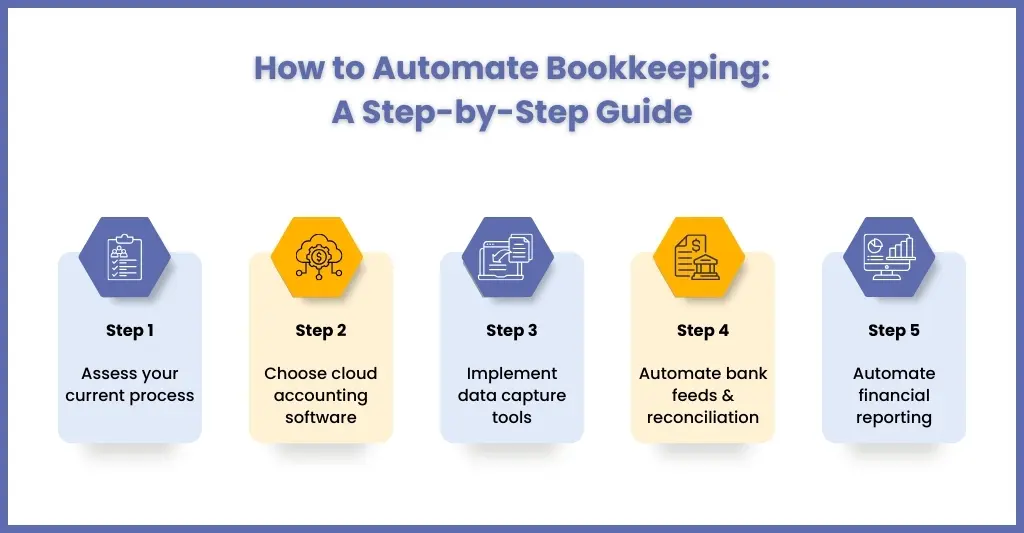
We have lost track of how many accounting practices approached us, asking how to automate bookkeeping without disturbing their accounting work. Well, here are the steps you must follow:
Step 1: Assess Your Current Bookkeeping Process
Begin with identifying bookkeeping tasks that are repetitive and time-consuming, such as:
- Manual data entry
- Invoice processing
- Receipt capture
- Bank reconciliation
These tasks are the usual suspects and are the best candidates for automation.
Step 2: Select a Cloud Accounting Software
Without a cloud-enabled bookkeeping accounting software, bookkeeping automation is not possible.
Popular options for UK accounting practices include:
- Xero
- QuickBooks Online
- Sage Business Cloud
These solutions are MTD compliant and follow the latest UK accounting standards, plus it integrates well with multiple automation tools.
Step 3: Implement Data Capture Automation
Bookkeeping software records, categorises, and reconciles financial transactions to maintain general ledgers; without it, data bookkeeping software is worthless. To provide that data to the bookkeeping software, you will need data-capturing software.
Such software extracts data from multiple sources, validates it, and converts the data from documents (invoices, receipts) into structured digital formats using OCR/AI technologies. The data captured by these tools serves as the input for bookkeeping.
Examples of data capturing tools are:
- Dext
- AutoEntry
- Hubdoc
These tools convert invoices and receipts into digital accounting entries.
Step 4: Automate Bank Feeds and Reconciliation
Bank feeds automatically import transactions from financial institutions. Automation tools match transactions with invoices and receipts, reducing reconciliation time.
Step 5: Automate Financial Reporting
Another major work automated by automation tools is the generation of reports, such as:
- Management accounts
- VAT reports
- Expense analysis
- Cash flow projections
These steps will help you make better decisions and the even good news is most of these steps get covered if you chose to outsource bookkeeping and many accounting practices are doing just that.
Best Bookkeeping Automation Software for UK Accountants
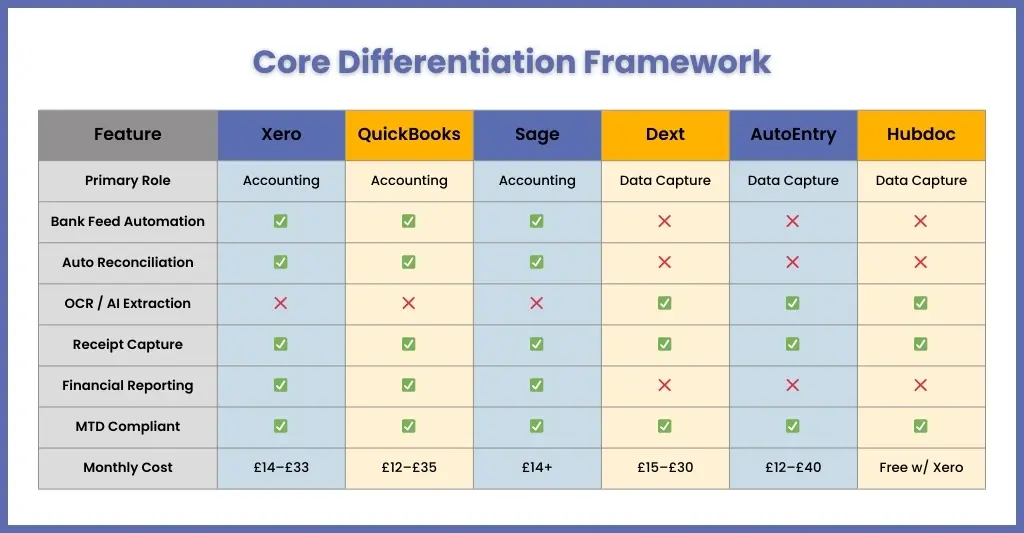
Right now, the UK accounting market is filled with tools that support the automation of bookkeeping. But you deserve the best, and we have listed the best bookkeeping automation tools that will serve your purpose.
Xero
It is one of the most widely used and trusted accounting software by accounting practices and accountants across the UK.
This software contains features that support bookkeeping automation, such as:
- Bank feed automation
- Automated reconciliation
- Financial reporting dashboards
QuickBooks Online
Another popular accounting software is trusted and used heavily by accounting practices and even small businesses.
Why is that? Because it has certain key features that have made life easier for accountants, such as:
- Automated expense categorisation
- Invoice tracking
- Real-time financial reporting
Dext
Dext focuses on capturing data in receipts and invoices, which can be thousands. It will take care of data entry, reduce errors, and free up the time of your accountants to focus on advisory and high-value services. Also, it can seamlessly integrate with major accounting tools like Xero and QuickBooks.
AutoEntry
AutoEntry is another software that automatically grabs data from receipts, invoices, statements, and other financial documents, thus saving time and effort. It also integrates seamlessly with HMRC-compliant software such as Xero and QuickBooks.
Hubdoc
Say goodbye to data entry by adopting Hubdoc. This tool does the data entry by reading key information from bills and receipts and turning it into usable data. You will only have to store the bills and receipts digitally and then upload them to Hubdoc.
How Much Does Bookkeeping Automation Cost for UK Accounting Practices?
It should be understood that the cost of bookkeeping automation will depend on the utilisation of the tools and the amount of work you will want to automate.
Still, we are putting up the approximate cost of each tool might cost you:
| Software | Average Monthly Cost |
| Xero | £14 – £33 |
| QuickBooks Online | £12 – £35 |
| Dext | £15 – £30 |
| AutoEntry | £12 – £40 |
However, the real cost consideration is time saved.
For example:
Consider if automation is saving 30 hours per month of your accountant’s time that goes into data entry. That means 30 hours to focus on high-value services that will deliver thousands of pounds to your practice.
Many practices have found another way to make automation economical, by avail bookkeeping outsourcing services that combine automation. That allows them scale up without much cost.
Frequently Asked Questions About Bookkeeping Automation
What is the best bookkeeping automation software for UK accountants?
Some of the most popular automation software available for UK accountants are Xero, QuickBooks Online, Dext, AutoEntry, and Hubdoc. These tools integrate well with multiple accounting systems and are MTD-compliant.
Will bookkeeping automation replace bookkeepers and accountants?
No, bookkeeping automation will only takeover the repetitive bookkeeping tasks that does not need human judgement.
Certain accounting tasks cannot be automated like
1. Financial analysis
2. Tax planning
3. Advisory services
4. Compliance oversight
Automation will help your accountants to divert towards high-value services.
How much does bookkeeping automation software cost?
The approximate cost of automation will range between £14 to £40 (software cost). But also consider that the cost of bookkeeping automation will also depend on the number of tasks you are going to automate.
How does bookkeeping automation support Making Tax Digital (MTD) compliance?
Automation tools integrate directly with HMRC-approved accounting platforms, helping firms maintain accurate digital records and submit VAT returns efficiently.
What does an outsourced bookkeeper do?
Outsourced bookkeeping means hiring an external individual or firm to handle some or all of your business’s financial record‑keeping tasks.
Conclusion
Bookkeeping automation is rapidly changing the UK accounting landscape, and it has given a way for practices to save time, increase accuracy, and scale without hiring. You cannot do without it, especially when compliance requirements from HMRC are rising, so are the transaction volumes and client expectations.
When automation is combined with outsourcing, you can further slash costs and focus on delivering high-value advisory services to your clients. This is where outsourcing partners like Corient come into the picture, offering experienced bookkeeping teams who know how to operate multiple automation tools. Our services have enabled practices in reducing their operational pressure while delivering better services to their clients.
Are you ready to automate your bookkeeping? Connect with us and see the transformation.
