

In today’s UK accounting market, to survive and thrive will need outsource your bookkeeping, but it’s not without its challenges. According to Robert Grant FCCA, Initor Global’s head of customer experience, the cost of outsourcing is typically 50% less than that of an onshore resource. It has brought accuracy, compliance, and speed in reporting, but it also brings a fear of losing control among practices. Is this fear valid? The answer is in the experience of an accounting practice.
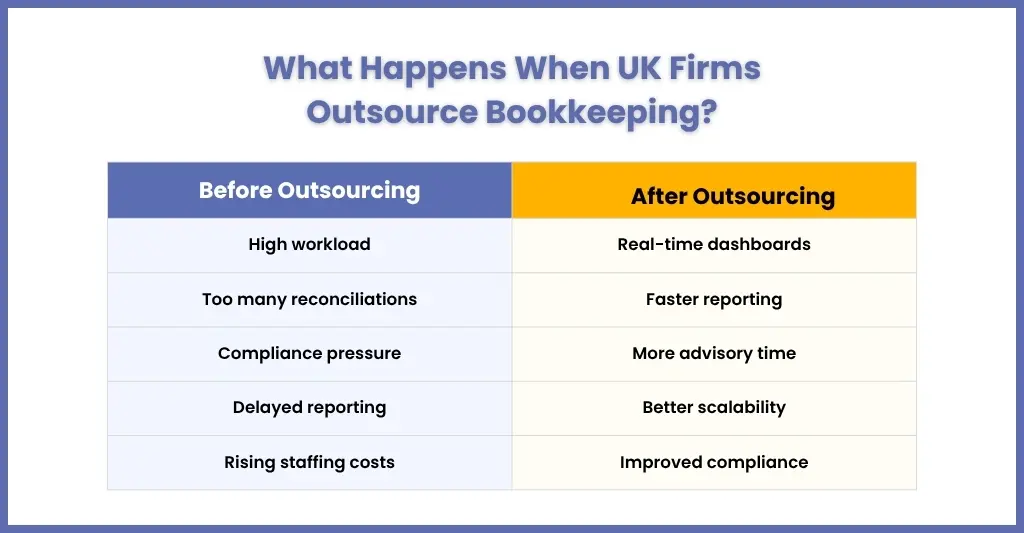
An accounting practice from the UK was burdened with multiple invoices, reconciliations, and VAT returns. Hiring more staff to handle this work was not possible for the practice due to rising overhead costs. Instead, it chooses to outsource bookkeeping to a provider.
In a few weeks, the practice will have access to financial reports along with oversights through dashboards. This allowed the practice to transition towards high-value advisory services.
You can scale by partnering with a professional outsourcing provider without losing control. In this guide, we’ll explore everything you need to know: why outsource, how to do it effectively, and how to maintain visibility and control over your finances.
What is Bookkeeping Outsourcing?
Bookkeeping outsourcing is an exercise in certain aspects or entire bookkeeping workload is handed over to a third party bookkeeping outsourcing provider who will do recording transactions, managing invoices, and reconciling accounts on your behalf.
Why Outsource Your Bookkeeping?
Under bookkeeping outsourcing services, you will be transferring some of your bookkeeping responsibilities to your outsourcing partner. However, do not mistake this as a tactical decision, it’s a strategic one that will transform the working style of your practice forever.
Here’s why you must outsource your bookkeeping:
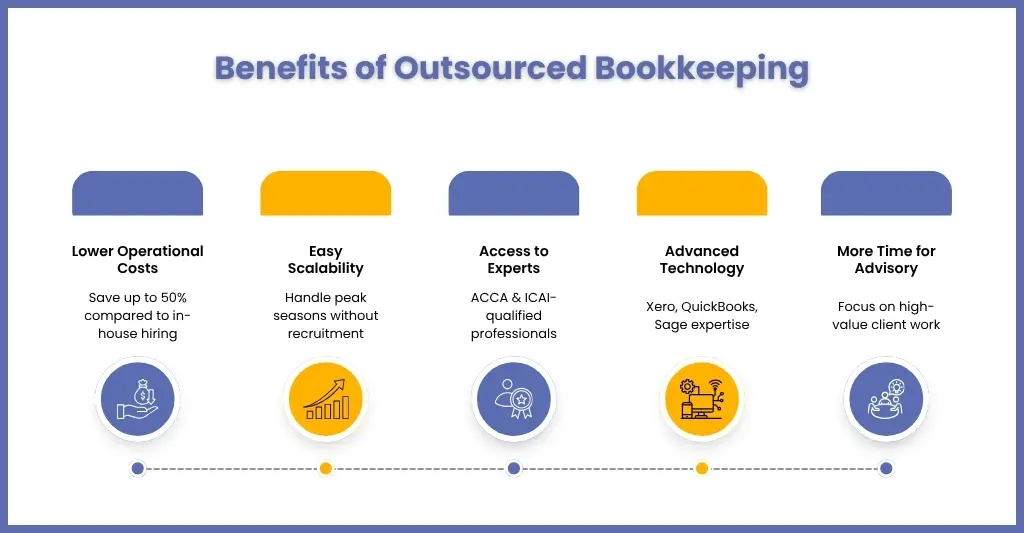
Does Not Cost Much
Hiring and maintaining an in-house bookkeeping staff means costs in salaries, benefits, training, and infrastructure. When you outsource your bookkeeping, you will only need to pay for the services you avail through a flexible or pay-as-you-go basis.
Easy Access to Expertise
Professional and well-established outsourcing firms like Corient employ only accountants who are ACCA & ICAI qualified. This ensures your bookkeeping is compliant with the latest HMRC regulations, VAT obligations, and MTD requirements for VAT and Income Tax.
Easy Scaling
Scaling up in-house during peak season means more recruitment or additional workload on your existing staff. But when you outsource your partner will scale up its services as per your requirement effortlessly without additional cost or recruitment.
Access to Advanced Technology
Getting access to advanced version of bookkeeping software like Xero, QuickBooks or Sage and operating them flawlessly is not easy for practices that lack expertise. But that’s not a problem when you outsource your bookkeeping. You will have access and expertise in operating them, giving you visibility of your client’s finance and automate the entire process.
Focus on Core Services
With the bookkeeping workload out, your internal team can focus on core or high-value services that will propel your practice to the next level, such as advisory services and strategic planning.
Steps to Outsource Your Bookkeeping Without Losing Control
The path of transition from in-house bookkeeping to outsourcing bookkeeping has its share of thorns. Yet, by following a few steps, transition can take place smoothly and successfully.
Step 1: Assess Your Needs
Firstly, identify which bookkeeping tasks or other accounting tasks you want to outsource or you want to outsource the entire bookkeeping.
Ask yourself these questions:
- What kind of bookkeeping outsources services you need?
- How much transactions do your clients do each day and month?
- Do I need daily, weekly, or monthly bookkeeping updates?
- What accounting software do I need?
Step 2: Research and Shortlist Bookkeeping Providers
Based on your needs, start searching for your outsourcing bookkeeping partner that can fulfil your demands.
Ponder on certain factors while shortlisting:
- Experience & qualifications (e.g., CPA, Certified Bookkeeper)
- Industry expertise
- Testimonials and online reviews
- Software expertise in QuickBooks, Xero, FreshBooks, etc
- Pricing flexibility
Step 3: Assess them through a meeting
Before you select a bookkeeping provider, meet and assess their skills in bookkeeping and their communication skills.
You ask questions like:
- What kind experience you have in bookkeeping?
- What tools you use while doing bookkeeping?
- How you will secure my client’s financial data?
- How you will ensure accuracy and compliance with tax regulations?
- The frequency of reports and updates
Step 4: Decide on the Scope of Work and Expectations
Before you decide your bookkeeping outsourcing partner, discuss with them about the expectations and responsibilities clearly so that both of you are on the same page
Define the following:
- Bookkeeping tasks
- Frequency of updates
- Communication modes
- Turnaround time
- Billing structure
Step 5: Giving Safe Access to Your Clients Financial Data
You will need to share financial records of your clients to your partner in a secure way. To do that without compromising on security, you will need to:
- Provide access to your accounting software
- Create secure file sharing using Google Drive or an encrypted portal
- For added security use multi-factor authentication (MFA)
Step 6: Transition and Onboarding Process
To achieve smooth transitions, you will need to provide your partner with:
- Past financial records
- List of all business expenses & revenue sources
- Breakdown of your chart of accounts
- Any specific bookkeeping preferences or reporting formats you require
Step 7: Maintain Regular Communication
Maintaining constant communication will ensure monitoring so that transition stays on track.
Step 8: Conduct Performance Review
After a few months of outsourcing, assess whether bookkeeping outsourcing is doing well for the practice and your clients.
Ask a series of questions:
- Are you getting accurate reports on time?
- Are your queries getting resolved quickly?
- Are your errors going down?
Benefits of Professional Outsourced Bookkeeping
You would not like your accountants to waste their time running behind reconciling accounts or chasing down receipts. That’s like many; even you would prefer to outsource your bookkeeping. It’s not just a cost-saving measure but a strategic decision that will unlock time, focus, and financial clarity.
When you outsource your bookkeeping, you are bound to gain some big benefits:
Significant Cost Savings
In-house bookkeeping means more cost with regards to salaries and benefits. However, outsourcing can save your costs in recruitments and you will need to pay only for the services your avail.
Better Accuracy and Compliance
When your clients’ books are taken care of by a professional service provider through experts, then the risk of costly errors goes down. These experienced accountants will stay updated with the latest compliance regulations and accounting standards.
Focus on Value Adding Tasks
Time is precious, and it must be invested in tasks that increase the value of your practice through advisory services, not by getting bogged down with time-consuming bookkeeping tasks.
Access to Expert Talent and Tools
Professional bookkeeping providers possess specialised knowledge and use advanced software which you cannot possess or operate. The combination of knowledge and tools will increase the efficiency of your practice.
Flexibility and Scalability
Whether you are expanding your practice or you require extra help during tax season, your outsourcing partner will stand up to the occasion by offering services as per your requirements.
How to Maintain Control While Outsourcing
It’s a misconception that when you outsource your bookkeeping you lose control over it. Yet, many practices feel like that and so can you. To prevent that do the following things.
- Use dashboards for monitoring all transactions in real-time
- Insist for weekly or monthly reports from your outsourcing partner.
- Define and communicate with your bookkeeping provider as to which decisions require your approval
- Conduct random checks to ensure accuracy and that required compliance is being followed.
- Treat your outsourced provider as an extension of your team
Best Tools for Outsourced Bookkeeping in the UK
The UK accounting market is filled with multiple accounting tools, but only a few give the perfect visibility and control. Those tools are:
- Xero: Cloud-based accounting with real-time dashboards.
- QuickBooks Online: Automated invoicing, bank reconciliation, and reporting.
- Sage Business Cloud Accounting: Strong integration with outsourced providers.
- Hubdoc / Dext: Automate document collection and invoice capture.
- Zapier or n8n: Automate repetitive workflows between accounting tools.
When successful integration between accounting software and bookkeeping outsourcing provider happens, transparency is ensured, risk is reduced, and monitoring can be done without micromanaging it.
Signs Your Business Is Ready to Outsource Its Bookkeeping
Not sure if it’s the right time? Look for these signs:
- Your internal team is overwhelmed during month-end or VAT submissions.
- Errors are increasing in client accounts or VAT returns.
- You’re spending excessive time on routine bookkeeping instead of advisory services.
- Growth is limited by the capacity of your finance team.
- You want access to expertise, automation, and real-time reporting without hiring additional staff.
If any of these resonate, outsourcing can be a strategic solution to scale efficiently.
Frequently Asked Questions About Outsourcing Your Bookkeeping
Why outsource your bookkeeping instead of hiring in-house?
When compared with in-house bookkeeping, multiple practices have found bookkeeping to be more cost-effective, with access to experts, easy to scale, and access to advanced technology without any long-term commitments.
What should I expect from a professional outsourced bookkeeping service?
Expect accuracy, timely reporting, VAT and payroll compliance, secure handling of data, and real-time dashboards for transparency.
Can outsourced bookkeeping integrate with my accounting and payroll systems?
Yes, most professional providers integrate with Xero, QuickBooks, Sage, and other cloud-based tools for seamless data flow.
How much does it cost to outsource bookkeeping?
Outsourcing bookkeeping generally costs between £80–£350 per month for small businesses, £400–£1,500 per month for mid-sized firms, or roughly £20–£55 per hour for freelance services in the UK. When compared to in-house bookkeeping and the benefits it provides in terms of expertise, speed, and compliance, it’s quite cost effective.
Take Control of Your Finances — Without Doing the Bookkeeping Yourself
When done right, outsourcing bookkeeping will not feel like giving up your bookkeeping responsibility. Instead, you will get cleaner numbers, fewer surprises, and faster decisions, because your time is no longer spent chasing receipts, categorising transactions, or untangling month-end confusion.
Your goal should be to outsource your bookkeeping to the right outsourcing partner. When that’s achieved, you will know what’s happening to your clients in real-time, not weeks later when the damage is already done.
By partnering with a trusted provider like Corient you will be freeing up your team to focus on advisory work, ensuring compliance with HMRC regulations, or achieving faster month-end closes, outsourcing allows accountants to maximise efficiency, accuracy, and growth.
Ready to outsource your bookkeeping without losing control? Connect with us and see how we provide flexible, reliable, and secure solutions tailored to your practice.
